
How should retirees in Dharamshala invest their retirement money?
On the most basic sense, retirees in Dharamshala should invest their retirement money not based on the highest returns but on their income requirements, existing savings and most importantly their ability to tolerate risk. Generally, the risk tolerance changes after retirement and the investment should indicate the same. A balanced approach that combines safer investments along with some exposure to long term investment for growth can be a good way to go.
Retirement is one of the, if not the most important transition of anyone’s life. It is also one of the most important reason to start investing along with child education. These two goals generally take priority above any other goal for most of the families. So when it comes to investing for retirement there can be a lot of thinking involved. While options like SWP give you a lot of flexibility when planning, most people are not aware of them. While dealing with retirees in Dharamshala and Kangra, we notice this very often. And we can assume that it is no different for the rest of the country as well. Apart from the metro cities.
Investing your retirement money doesn’t mean putting all of it into one safe product or chasing higher returns. A better approach is to separate the money you may need soon from the money you can leave invested for years, and then choose investments according to your income needs, risk tolerance and time horizon. For retirees in Dharamshala or even Kangra, this can mean combining suitable fixed-income investments with long-term growth-oriented mutual funds, while using options such as SWP when regular withdrawals are required. At Steadrow Capitals, we see this difference quite often while working with retired investors in the region, because the right retirement portfolio can look very different from one person to another.
Retirement does not mean the end of your investing journey
A lot of people think that we invest all of our life to take it out at retirement. That is a very shallow view of the whole investment journey. Actual retirement and investment journey can be much more vibrant. Your retirement will lead to a big transition in your investment decisions but not necessarily the end of it. The most important thing to know first of all is how much money will you need to support your lifestyle? And can it be done with the corpus you have?
After retirement your goals can change. You might want to keep some money away for your kids or you might want to withdraw to support your dreams that you have always wanted to do after your retirement. These events will dictate how you need to transition your investment.
Retirement is an opportunity as well
While retirement has its own challenges, it also provides a lot of opportunity as well. If invested wisely, you can end up leaving a fortune for your young ones. With the right planning you can support your desired lifestyle without depending on anyone else. After all, that is what everyone wants. To live your life with dignity without depending on anyone else.
Here in Dharamshala, we find a lot of people retiring from Army with sufficient funds but not much planning on how to utilize it. Having large funds at retirement is a good thing but it is equally important to invest them properly as well.
Although, retirement experiences can vary from person to person. But we have tried to sort them in three stories to understand the overall challenges and the potential solutions to it. What we have noticed while managing investments for retirees in Kangra is that most of them fall in these three categories. Not 100% accurately but they still give you a rough idea.
Retired army officer with both safety and growth in mind.
One of the retirement cases we handled at Steadrow Capitals was that of Col. Vikram Chand, a retired Army officer from Dharamshala.
He came to us after retirement with an approximate idea of what he wanted.
He wanted to invest one small portion for long term. He had no immediate need for that money and was willing to leave it invested for years.
But he did not want to take the same level of risk with the majority of his retirement savings. And that is understandable because after retirement, why would you want to take the same level of risk for all your money.
For that portion, his preference was much more conservative.
So when we were working on his portfolio at Steadrow, we did not try to make the entire corpus behave like a growth portfolio. A large part was structured around debt funds, money market funds, arbitrage funds and other suitable relatively conservative options, while a smaller portion was kept for long-term equity exposure.
His retirement corpus was not one big pile with one common objective. Some of it was meant for stability. Some of it could be kept aside for long term growth.
Vikram has also continued to review his portfolio with Steadrow. And he seems pretty comfortable with the level of risk he has taken. Not because we made some magic while picking his funds. But because his portfolio was taking only the level of risk which was okay for him.
That matters.
A retired investor doesn’t necessarily need a portfolio that never fluctuates. That isn’t realistic when you invest in market-linked products. But he can’t take the high level risks also.
What matters is whether the amount of fluctuation is something you can live with without being forced into a panic decision. Because those panic decisions can damage your returns in the worst way.
SEBI’s Riskometer is one tool which can be used to judge the risk of your funds.
Different retirement problem
Prakash Sharma retired from the electricity department, Palampur.
His concern when he came to Steadrow wasn’t really about building the highest possible corpus.
He was worried about maintaining his lifestyle after retirement. And this is generally a concern for a lot of people. Your salary is going to be half of before but your expense might not be.
He was also quite conservative when it came to investment risk. Like most of the after retirement investors here. And that changed the way we approached his retirement money.
Obviously, we did not want to put his retirement corpus into equity-heavy investments simply because equities have higher long-term growth potential. For someone who needs regular withdrawals, a prolonged fall in equity markets can create a very different problem. What is he going to withdraw from if the funds keep falling?
Imagine needing to withdraw money every month while the investment from which you are withdrawing is going through a large decline. That would be a massive headache for anyone. You can’t keep on eating through a fund that is already falling
The investment may recover eventually. But the retiree still needs the money today. And if he withdraws right now, his recovery will get even more difficult.
For Prakash, we structured an SWP-based approach using a portfolio focused on relatively conservative investment categories such as debt-oriented funds and other suitable fixed-income-oriented options.
An SWP, allows an investor to withdraw money from a mutual fund at regular intervals. It is a withdrawal facility, not a guaranteed monthly interest payment. The fund units are redeemed to generate the withdrawal amount.
The other part of the discussion was equally important: how much should he withdraw?
Infact, I would call this a more important question than the other one.
We did not want his withdrawals to be unnecessarily aggressive compared with what could reasonably be expected from a relatively conservative portfolio.
Now we can’t predict the exact returns his conservative portfolio will earn. Mutual fund returns are not fixed, and even debt-oriented funds carry market and other risks. AMFI clearly states that mutual fund schemes are not guaranteed or assured-return products.
But with a lower-risk portfolio, a reasonable withdrawal plan can be designed around a conservative return expectation and then reviewed over time.
He wanted to continue living the way he was accustomed to living after retirement.
So rather than asking his retirement money to chase returns, we were trying to make it support his monthly life without taking risk that he was uncomfortable with.
That is a very different retirement strategy from the previous case we discussed
Retirement with legacy goals
Pradeep Singh, from McLeodganj retired from BSNL. He came to us with another kind of problem.
He was financially comfortable.
His pension was enough to take care of his lifestyle, so he wasn’t dependent on his entire retirement corpus for monthly expenses.
His concern was what would happen to the money after him. Basically, he wanted to make the most of this money that he has right now.
He wanted to build something that could eventually become a financial legacy for his family.
That gave us more room to think about the long term.
Pradeep decided to put a portion of his monthly pension into a SIP. He also allocated part of his retirement corpus to a long-term growth portfolio that Steadrow structured around his objective.
The important thing was that this money did not need to be withdrawn for his current lifestyle.
That matters a lot when deciding how much market risk a retiree can reasonably take. If he can keep his money untouched, then he can take slightly higher risk and chase higher returns as well.
Because Pradeep had his pension supporting his regular expenses, the long-term portion of his portfolio could have a higher allocation towards diversified equity funds. The intention was to leave that money invested for the long term rather than use it for his regular retirement expenses.
There was another small detail we paid attention to with him.
Nomination.
If the entire purpose of an investment is to eventually benefit your family, the nominee details and other documentation should not be treated as paperwork to complete and forget.
At Steadrow, we make sure those details are properly taken care of as part of the investment process.
Pradeep’s case is a good reminder that retirement doesn’t necessarily end the need for growth.
Sometimes retirement is when a person finally has enough money that can be invested with the next generation in mind.
Three retirees. Three different portfolios.
This is why we don’t think there is one “best mutual fund for retirees”.
Vikram was willing to take some equity risk because part of his money could stay untouched for the long term. But most of his retirement corpus needed a more conservative approach.
Prakash needed regular withdrawals and was uncomfortable with significant risk. His portfolio therefore had a different purpose.
Pradeep had a pension that covered his lifestyle. He could therefore leave a portion of his money invested for many years and focus on long-term growth and legacy.
All three were retired.
Yet giving all three the same portfolio would have made little sense.
The portfolio should follow the person’s situation, not the other way around.
How should a retiree divide their investment money?
A useful way to start is to forget fund names for a moment. If you read the stories above carefully then you might have noticed that all had different priorities and different situations. And that gave result to different strategy of investment for each one. But if you zoom out a bit, you will realize that when planning for yourself you need to worry about these few things only.
Start with the purpose of the money.
Money needed for immediate expenses
This is the money that may be required for regular household expenses, emergencies or expenses you already know are coming.
You don’t want your ability to pay next month’s bills to depend heavily on what the equity market is doing that month.
Bank deposits and appropriate lower-risk investment options can have a role here depending on the individual’s situation.
Money that can stay invested for some years
This portion can potentially be used for future expenses that are not immediately due.
Depending on the risk profile and requirements, some investors may consider debt funds, money market funds, arbitrage funds or other suitable categories.
But it is important not to treat these as guaranteed-return products. Mutual funds are market-linked investments, and the risk varies across categories and schemes.
Money that you genuinely don’t need for a long time
This is the part that many retirees overlook.
If your pension, rental income or other reliable income already covers your lifestyle, you may have money that doesn’t need to be touched for 10, 15 or even 20 years.
That money has a much longer investment horizon.
For an investor who can tolerate the fluctuations, equity mutual funds can have a role in this part of the portfolio.
This is broadly what made Pradeep’s situation different from Prakash’s.
The question wasn’t “Is equity good for a retired person?”
The better question was:
Does this particular retired person need this particular money soon?
Why an SWP can be useful for retirees
For someone who needs to create regular cash flow from their investments, an SWP can be one option to consider.
Instead of redeeming a large amount whenever money is required, the investor can set up withdrawals at regular intervals. This is generally a very good idea because no one wants that insecurity that comes with pulling out your savings and then having a low balance to support your retirement.
But there is an important distinction.
An SWP is not the same thing as an FD paying monthly interest.
Your mutual fund units are being redeemed to provide the withdrawal. If the portfolio is performing poorly, the number of units that need to be sold for a particular withdrawal can be higher.
That is why the withdrawal amount needs to be looked at along with the underlying portfolio and the overall retirement corpus.
This is also why we were careful with Prakash’s withdrawal plan.
The objective was not to promise him a certain return every year. The objective was to avoid building a withdrawal requirement that was unnecessarily aggressive for the type of portfolio he was holding.
That is a more realistic way of thinking about retirement income from market-linked investments.
What we look at when a retiree comes to Steadrow
When someone approaching retirement or already retired from Dharamshala, Kangra or Palampur comes to Steadrow, the first conversation isn’t usually about fund names.
We want to understand the person’s actual situation.
How much regular income do they already have?
How much do they need every month?
Which part of their retirement corpus might be needed soon?
Which part can remain untouched?
What happens if the market falls?
Are they comfortable seeing their investment value fluctuate?
Do they have a long-term goal for their children or grandchildren?
And perhaps the most important question:
What would make this person feel financially secure after retirement?
Only after understanding that do the investment choices start becoming meaningful.
For one person, the answer may involve a largely fixed-income-oriented portfolio.
For another, it may involve an SWP.
For someone like Pradeep, a sizeable long-term equity allocation may make sense because his regular income already takes care of his lifestyle.
SEBI also recommends that investors periodically review their financial needs and goals and check whether their portfolio remains suitable for those needs.
What should you do before investing your retirement corpus?
Don’t start with the question, “Which mutual fund should I buy?”
Start with your monthly expenses.
Then look at the income you already have from pension, rent, interest or other sources.
Once you know the gap, you can work out how much your investments may need to contribute.
Then separate the money you may need soon from the money you genuinely don’t need for many years.
Only after that should you start discussing investment categories.
This approach may sound slower than simply choosing a fund with the highest historical return.
For a retirement corpus, that’s probably a good thing.
You don’t get a second salary every month after retirement. The money you have accumulated needs to be treated with more care.
And that doesn’t mean keeping everything out of the market.
It means taking only the amount of risk that has a purpose.
This is also why having a local point of contact can be useful so that you can do one on one and understand all the aspects of your retirement investments. Retirement planning is never a one time conversation. And we encourage investors to visit us or contact us for a detailed discussion of their retirement investment.
Before investing your retirement fund, you should have investment plan ready and should know how much of your money can grow in high risk funds and how much you can keep in safer funds. If you are nearing retirement or already retired, you can reach out to Steadrow capitals for this. We have been managing investments for investors around Dharamshala, Kangra and Palampur since 2016.
Frequently Asked Questions About Investments for retirees in Dharamshala
Is mutual fund investment suitable after retirement?
Yes. Mutual funds can be a very useful tool for investing after retirement. However, not all mutual fund categories might be fit for you. The choice depends on whether the money is needed for maintaining the current lifestyle or for long term wealth creation.
Can mutual funds provide monthly income with SWP after retirement?
SWP can help you withdraw monthly amount from your mutual funds. Your remaining funds stay invested and can still grow while you receive regular cash flow.
How should I invest my retirement fund ?
A retirement fund should be invested in lesser risky portfolios but can depend on individual risk profile. Debt funds provide good option for conservative risk. A balanced portfolio with the mixture of equity and debt funds can be another option for those retirees who can take higher risk.
How much money is enough for retirement ?
This amount depends on your monthly expenses, inflation, existing income sources and desired lifestyle. You can add these and you will have your monthly number.
Where can I get retirement investment guidance in Dharamshala?
Retirees in Dharamshala, kangra and nearby areas can consult Steadrow Captials for structured planning of their retirement investment.
Client confidentiality note: The client names used in this article have been changed to protect their privacy. The situations described are based on actual experiences of clients who have invested through Steadrow Capitals, but identifying details have been modified. The examples are shared only to explain different retirement-investment situations and should not be treated as a recommendation or representation of future outcomes.
Disclaimer: The details shared in this article are intended strictly for educational and informational purposes and should not be construed as financial, legal, or investment advice. Mutual fund investments carry inherent market risks; please review all scheme-related documents thoroughly before committing capital. Mutual fund investments made through a mutual fund distributor are generally through Regular Plans, where the distributor may receive commission from the AMC. Investors should understand the applicable costs and the difference between Regular and Direct Plans before investing. The details provided are compiled entirely at the discretion of the owner, reflecting general market consensus and available public data. This article does not hold the author, owner, or any affiliated parties financially or legally liable for your investment choices or potential losses. Past performance of any Asset Management Company (AMC) or specific fund does not guarantee future results. Investors are strongly encouraged to consult a certified financial advisor or wealth distributor to assess their unique financial objectives and risk appetite prior to investing.
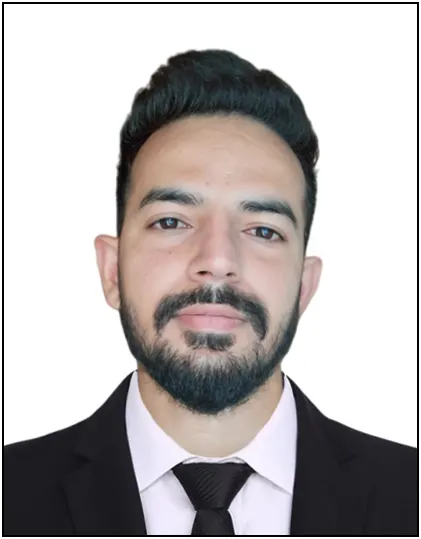
Holding the NISM Series V-A certification, Himanshu is a Partner at Steadrow Capitals. Backed by over ten years of equity market experience, he helps investors make informed financial decisions utilizing strictly goal-oriented strategies.